Publications. Podcast features. Articles that quoted her. Projects most people would put right at the top of their LinkedIn.
None of it was on hers.
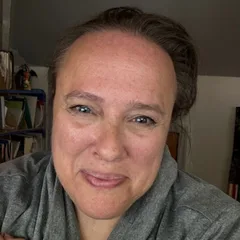
Solange Wilson knew her profile needed to change. She just didn’t want to be the one to change it. And that’s the smart instinct, not the lazy one. Overhauling a profile is a lot of work. Doing it on yourself is harder still, because you are too close to your own story to see what’s actually good in it.
Her words, from the recommendation she left me:
“I needed someone with fresh eyes and the expertise to translate who I am into something that actually lands.”
Translate. That’s exactly the job. The material was all there. It just wasn’t on the page, and the parts that were on the page pointed in the wrong direction.
Why a career change quietly breaks your LinkedIn profile
Solange’s profile was built around her day job. The one that isn’t The One.
And that’s the trap almost nobody sees coming.
Your LinkedIn keeps faithfully describing the work you’re walking away from, in the language of the field you’re trying to exit. It’s accurate.
It’s also a signpost pointing everyone toward the wrong version of you.
Boring. Predictable. (I mean the profile. Never her.)
Because here’s what wasn’t on it: the publications, the podcast features, the write-ups, the projects. Every piece of evidence that she’d been building something bigger than a job title. Invisible.
If you know her, that profile made no sense. None. Nada. Zilch.
The best proof on your LinkedIn is usually the stuff you left off
This is the part that drives me nuts. Every. Single. Time.
People bury their most interesting material because it doesn’t feel “professional enough.” Or it lived somewhere else. Or they just never thought LinkedIn was the place for it.
The speaking. The features. The projects that didn’t fit neatly under a job.
The problem is…that’s the GOOD stuff. That’s the proof a prospect actually reads and goes, “Oh, I get it now.”
So we put it where people could see it.
- Publications as earned media.
- Projects that show range instead of a task list.
- A whole body of work that had been sitting in a drawer, finally doing something.
You don’t need a website yet. You need a LinkedIn company page.
Solange had never had a company page. Not because she didn’t need one — because she was waiting on a website.
She’d planned to pay someone to build her a site, and somewhere along the way realized she didn’t actually need one yet.
What she needed was a home base for the new business, something LinkedIn would recognize and surface, something to anchor her personal profile to.
That’s a company page. We built it from scratch.
(A company page isn’t a someday-when-the-website’s-ready project. It’s the anchor. It gives the new business an actual foothold on LinkedIn and gives her profile something to point to. Skip it and you’re a founder with no company attached to your name, which reads exactly as unfinished as it sounds.
And don’t even get me started on the dreaded gray box that will show up on your profile page. I can rant on those for longer than you want to read about it.)
What does it mean for a LinkedIn profile to “sound like you”?
Here’s where the real work happened. Not formatting. Voice.
We went back and forth — a lot — on who she was actually serving and what she wanted to say to them. I asked questions. I pushed her in directions she wasn’t sure about. We kept going until the words on the page matched the person behind them, right down to the branding she’d planned for the new business and never put anywhere.
Again, her words:
“It was a genuine collaboration. She asked the right questions, pushed me in the right directions and the result was a profile that finally felt like me.”
Finally felt like me.
Sit with that phrase, because it tells you what was wrong before.
The old profile didn’t feel like her. It was accurate, it was technically hers, and it still read like a stranger. No personality, no there-there.
Which, for a person who is all personality and very much has a there-there, makes no sense at all.
She put it better than I could, once she saw the finished profile:
“When you’re in it, you cannot see your own story.”
Which is the whole reason this works. Someone else can.
Now it’s branded. Vibrant. Easy to follow. It tells the world exactly what she does — internal communications for growth-stage tech founders, the systems that keep a scaling company from tripping over its own messaging, plus crisis plans built before the crisis instead of after — and who she serves. People read it and they get it.
And it’s already working. A few weeks in, in her words: “the work you did on my profile has already been opening doors I did not expect.”
That’s the whole game. And for the record: this was the fully private version, she and I in the room together, every section, until it clicked.
Her recommendation ends on a line I’m not going to improve on:
“If your LinkedIn is not working as hard as you are, Natalie is the person to call.”
One more thing, because she’s earned it: Solange Wilson just launched her own shop. If you’re scaling a startup and your messaging is starting to outrun you — or you want a crisis plan in place before you need it, which is the only time it actually helps — she’s the one to know. Her profile will tell you the rest. That’s the point.